
Mid-Year Planning Checklist for Business Owners and High-Net-Worth Families: Estate, Tax & Financial Strategies to Review Before Year-End
July 8, 2026
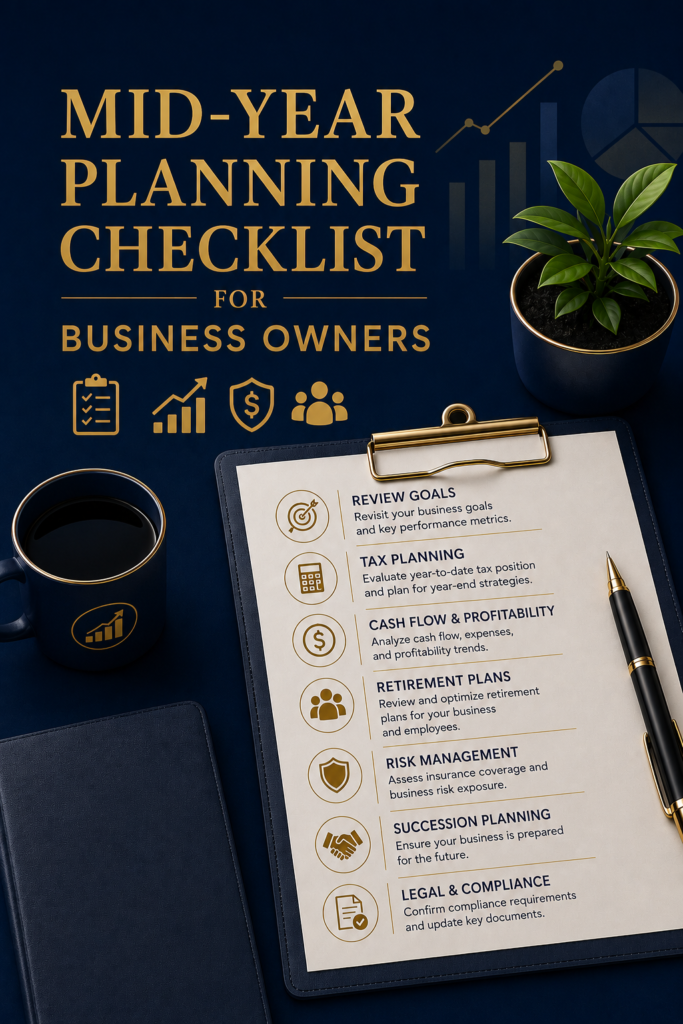
Mid-year is the ideal time for business owners and high-net-worth families to review estate plans, tax strategies, retirement planning, and wealth transfer opportunities before year-end.
As the calendar reaches its midpoint, many business owners and affluent families are focused on growing their businesses, managing investments, and enjoying the summer months. However, mid-year is also one of the best opportunities to evaluate your financial picture while there is still ample time to make meaningful adjustments before year-end.
Rather than waiting until the fourth quarter, a proactive mid-year review can help identify planning opportunities, coordinate your advisory team, and ensure your estate, tax, and financial plans continue to align with your goals.
Here are several key areas worth reviewing.
Review Your Business Performance and Cash Flow
The first half of the year often provides a clearer picture of how your business is performing compared to initial expectations.
Consider asking:
- Are revenues and profitability on pace with projections?
- Has your business experienced significant growth or unexpected challenges?
- Will your taxable income likely differ from what you anticipated earlier in the year?
- Are there upcoming liquidity events, acquisitions, or ownership transitions to prepare for?
Understanding where your business stands today allows your advisors to begin evaluating planning strategies well before year-end deadlines arrive.
Evaluate Your Tax Position
A mid-year tax review is often more valuable than a year-end scramble.
Topics to discuss with your CPA may include:
- Estimated tax payments
- Potential income shifting strategies
- Timing of deductions and expenses
- Charitable giving plans
- Retirement plan contributions
- Capital gain or loss planning
- Business equipment purchases
- Entity structure review
Changes in income, business profitability, or investment activity can significantly affect your overall tax picture. Identifying opportunities now provides greater flexibility than waiting until December.
Revisit Your Estate Plan
Estate planning should evolve alongside your family, your business, and your wealth.
Mid-year is an excellent time to confirm that your documents still reflect your wishes.
Review items such as:
- Wills
- Revocable trusts
- Durable powers of attorney
- Healthcare directives
- Guardianship designations
- Beneficiary designations
- Trustee and executor appointments
Life events—including marriages, divorces, births, deaths, business growth, or changes in family dynamics—may warrant updates.
Even if nothing has changed dramatically, periodic reviews help ensure your documents remain consistent with current laws and your long-term objectives.
Assess Business Succession Planning
For many entrepreneurs, their business represents their largest asset.
Yet succession planning is often postponed until retirement is on the horizon.
Mid-year provides an opportunity to ask:
- Who would manage the business if something unexpected occurred?
- Is there a written succession plan?
- Are ownership documents current?
- Are buy-sell agreements properly funded?
- Have future leadership candidates been identified?
Succession planning isn’t only about retirement—it is also about protecting employees, family members, and the long-term value of the business.
Review Your Investment and Retirement Strategy
Market conditions inevitably change throughout the year.
Rather than reacting to headlines, mid-year is a good time to determine whether your investment allocation still aligns with your objectives, liquidity needs, and risk tolerance.
Additional areas to evaluate include:
- Retirement contribution levels
- Cash reserves
- Concentrated stock positions
- Asset allocation
- Tax-efficient investment strategies
- Required liquidity for upcoming expenses
A disciplined review helps keep long-term planning on track regardless of short-term market movements.
Consider Wealth Transfer Opportunities
Families interested in transferring wealth across generations may benefit from reviewing their gifting strategies before year-end.
Potential discussion topics include:
- Annual gifting opportunities
- Education funding
- Family trusts
- Philanthropic planning
- Legacy planning objectives
- Asset ownership structures
Coordinating estate planning with tax planning and investment management often creates a more cohesive long-term strategy.
Confirm Insurance Coverage
Insurance needs often change as businesses grow and personal wealth increases.
Mid-year is an ideal time to review:
- Life insurance
- Disability insurance
- Umbrella liability coverage
- Business insurance
- Key person insurance
- Cyber liability coverage
- Long-term care planning
Ensuring coverage remains appropriate can help support your overall financial and estate planning goals.
Coordinate Your Advisory Team
Some of the most effective planning occurs when your CPA, estate planning attorney, financial advisor, and other professionals work together.
Mid-year provides sufficient time to:
- Identify planning opportunities
- Coordinate tax strategies
- Review legal documents
- Prepare for business transactions
- Address potential year-end deadlines
An integrated approach helps ensure each aspect of your financial life supports your broader objectives.
The second half of the year often moves quickly. Taking time now to review your estate, tax, business, and financial planning can help position you to make informed decisions before year-end.
Whether you’re growing a business, preparing for retirement, or building a lasting legacy for future generations, regular planning reviews are an important part of staying aligned with your long-term goals.
At Omni 360 Advisors and Omni Legacy Law, we believe thoughtful planning is an ongoing process. If it’s been a while since you’ve reviewed your overall strategy, mid-year can be an excellent time to begin that conversation.
This blog was developed with the assistance of AI-based tools for research, drafting and editing support (ChatGPT), and reviewed by OMNI 360 personnel for accuracy and relevance. The information provided is educational and general in nature and is not intended to be, nor should it be construed as, specific investment, tax, or legal advice.




