
Estate Planning Is Not “Set It and Forget It”: 5 Life Events That Should Trigger a Review
February 19, 2026
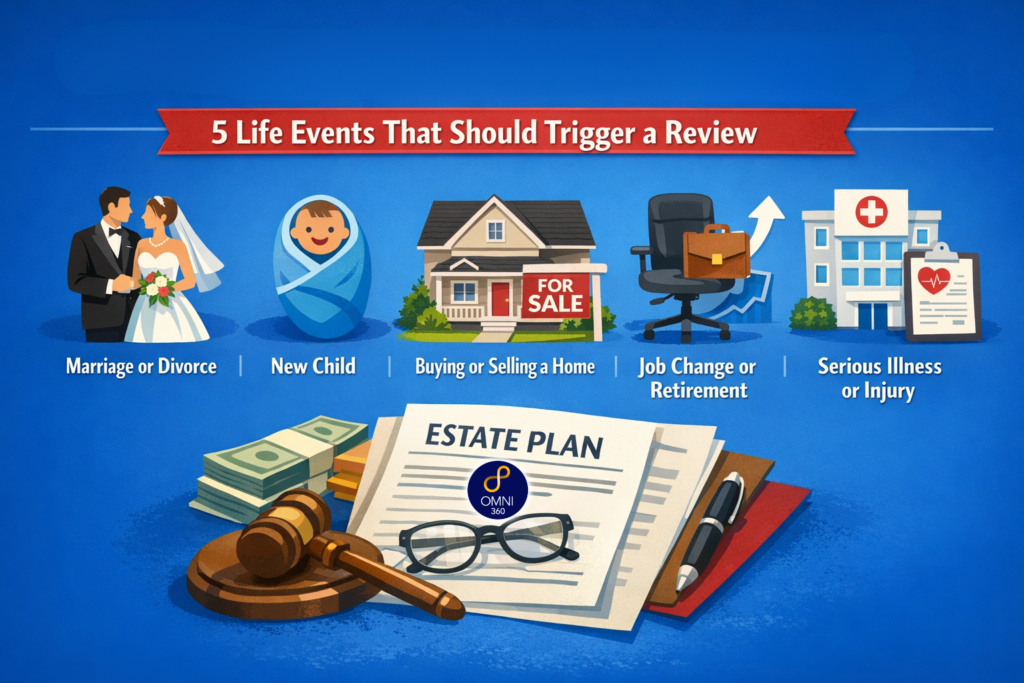
Major life changes can unintentionally disrupt your estate plan. Learn the five key events that should prompt a review to protect your family, assets, and long-term legacy.
Estate Planning Is Not “Set It and Forget It”
Estate planning is not a one-time transaction. It is an evolving strategy that should reflect your current family structure, financial position, and long-term intentions.
Many individuals put significant effort into creating an estate plan—only to place it in a drawer and revisit it years later. The challenge is that life changes. And when it does, an outdated estate plan may no longer reflect your wishes.
For business owners, high-net-worth individuals, and multigenerational families, regular review is essential. Below are five major life events that should immediately prompt a thoughtful estate plan review.
1. Marriage or Divorce
Marriage and divorce fundamentally alter your legal and financial framework.
Failing to update your estate plan after marriage could unintentionally exclude your new spouse. After divorce, outdated documents may still name a former spouse as beneficiary, executor, trustee, or power of attorney.
While some states automatically revoke certain provisions after divorce, relying on default state law can create uncertainty. Proactive updates help ensure:
- Beneficiary designations reflect your current intentions
- Fiduciary appointments align with trusted individuals
- Asset distribution matches your revised goals
A review after marital changes is not simply administrative—it is protective.
2. Birth or Adoption of a Child
Welcoming a child into your family is one of the most important triggers for estate planning updates.
This includes:
- Naming guardians for minor children
- Establishing or revising trusts
- Coordinating life insurance and liquidity planning
Without clear designations, courts may determine guardianship or asset management arrangements. A well-structured plan allows you—not the court—to make those decisions in advance.
For multigenerational families, this is also an opportunity to align long-term wealth transfer strategies with updated family dynamics.
3. Relocation to a New State
Estate planning laws vary significantly from state to state. A move can impact:
- State estate or inheritance tax exposure
- Community property considerations
- Validity of powers of attorney and healthcare directives
- Trust administration rules
Documents drafted in one state may still be legally valid in another—but they may not be optimal. Reviewing your estate plan after relocation helps ensure compliance with local laws and alignment with your new residency status.
4. Major Financial Changes
Significant financial events should always trigger a review. These may include:
- Buying or selling a home
- Receiving an inheritance
- Selling a business
- Experiencing a substantial change in net worth
As your balance sheet evolves, so should your estate strategy. Asset titling, trust funding, liquidity planning, and tax considerations may all require adjustment.
Estate planning is most effective when it reflects your current financial reality—not the one you had several years ago.
5. Retirement
Retirement marks a transition in income sources, risk tolerance, and long-term priorities.
This is an appropriate time to:
- Reevaluate retirement account beneficiary designations
- Review distribution strategies
- Assess healthcare directives and long-term care planning
- Confirm fiduciary appointments remain appropriate
For many families, retirement also shifts focus toward legacy planning, philanthropy, and structured wealth transfer to children and grandchildren.
The Importance of Ongoing Review
Even without a major life event, reviewing your estate plan every three to five years is a prudent practice. Laws change. Tax thresholds evolve. Family relationships shift.
An outdated plan can create unnecessary complexity, delays, or unintended distributions.
Estate planning is not about predicting the future—it is about preparing thoughtfully for it.
If you have experienced any of the events above, or if it has been several years since your last review, a proactive conversation can help ensure your estate plan continues to reflect your goals and values.
At Omni Legacy Law and Omni 360 Advisors, we focus on coordinated planning designed to align wealth, family, and long-term legacy in a thoughtful and structured manner.
This blog was developed with the assistance of AI-based tools for research, drafting and editing support (Chat GPT), and reviewed by OMNI 360 personnel for accuracy and relevance.




