
Should You Be Getting a Tax Refund? What Your Return Might Really Be Telling You
March 12, 2026
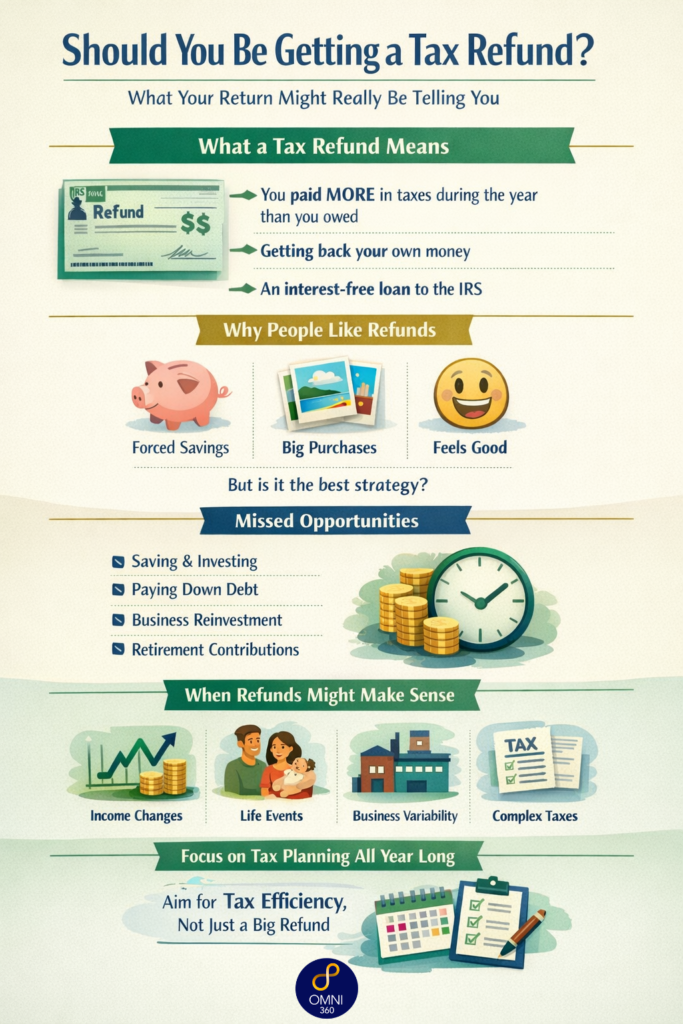
Many people look forward to a tax refund, but is it actually a good financial outcome? Learn what a tax refund means and how to think about withholding and tax planning.
Should You Be Getting a Tax Refund? What Your Return Might Really Be Telling You
Each spring, millions of Americans eagerly await their tax refund. For many households, it feels like a financial bonus—sometimes even the largest check they receive all year.
But from a planning perspective, a tax refund raises an important question:
Should you actually be getting one?
While refunds can feel rewarding, they often reveal something important about how your taxes—and your broader financial strategy—are structured.
Understanding what a tax refund really represents can help individuals, business owners, and families make more informed decisions about their finances.
What a Tax Refund Really Means
A tax refund occurs when you have paid more in taxes during the year than you ultimately owed.
This typically happens when too much is withheld from your paycheck or when estimated tax payments exceed your final tax liability.
In simple terms:
- A refund means you overpaid the IRS during the year.
- The government is returning money that was already yours.
For many people, refunds are driven by withholding calculations on W-2 income. For business owners and investors, the situation may involve estimated tax payments, deductions, or changes in income during the year.
Why Many People Like Receiving Refunds
Even though refunds represent overpayment, they are often welcomed. There are a few reasons why:
1. Forced savings
Some individuals intentionally over-withhold so they receive a lump sum at tax time.
2. Large purchases or debt payments
Refunds are sometimes used for vacations, home improvements, or paying down debt.
3. Psychological comfort
Receiving money back often feels better than owing taxes, even if the underlying math is the same.
While these reasons are understandable, they do not necessarily mean a refund is the most efficient financial outcome.
The Opportunity Cost of Overpaying Taxes
When you receive a large tax refund, you have effectively loaned money to the government interest-free throughout the year.
That money could potentially have been used for:
- Building emergency savings
- Investing for long-term growth
- Funding retirement accounts
- Supporting business reinvestment
- Paying down high-interest debt
For higher-income households and business owners in particular, optimizing cash flow during the year can be a meaningful component of broader financial planning.
When a Refund Might Make Sense
That said, receiving a refund is not automatically a problem.
There are situations where it may be reasonable or unavoidable, including:
- Income fluctuations during the year
- Major life changes such as marriage, divorce, or a new child
- Business income variability
- Complex deductions or tax credits
In these situations, refunds can simply reflect the natural uncertainty that exists in tax planning.
The key issue is not whether a refund occurs—it is whether your overall tax strategy is aligned with your financial goals.
A More Strategic Goal: Tax Efficiency
Rather than focusing solely on whether you receive a refund or owe taxes, many financial professionals encourage clients to focus on tax efficiency and planning throughout the year.
This can include:
- Reviewing withholding and estimated payments
- Coordinating tax planning with investment strategies
- Evaluating retirement account contributions
- Planning for liquidity events or business sales
- Considering multigenerational and estate implications
When taxes are viewed as part of a broader financial strategy, they become less about a single annual filing and more about long-term financial positioning.
A tax refund can feel like a financial win—but it often means you paid more than necessary during the year.
For individuals, business owners, and families focused on long-term wealth planning, the more important question is not whether a refund arrives, but whether your tax strategy supports your broader financial objectives.
Thoughtful planning can help align cash flow, tax obligations, and long-term goals in a more coordinated way.
If you have questions about how tax planning fits into your broader financial picture, the team at Omni 360 Advisors and Omni Legacy Law works with clients to explore strategies that support both current financial decisions and long-term legacy planning.
The information provided is educational and general in nature and is not intended to be, nor should it be construed as, specific investment, tax, or legal advice.




