
Why Entity Structure Matters for Business Owners, Investors, and High-Net-Worth Families
May 14, 2026
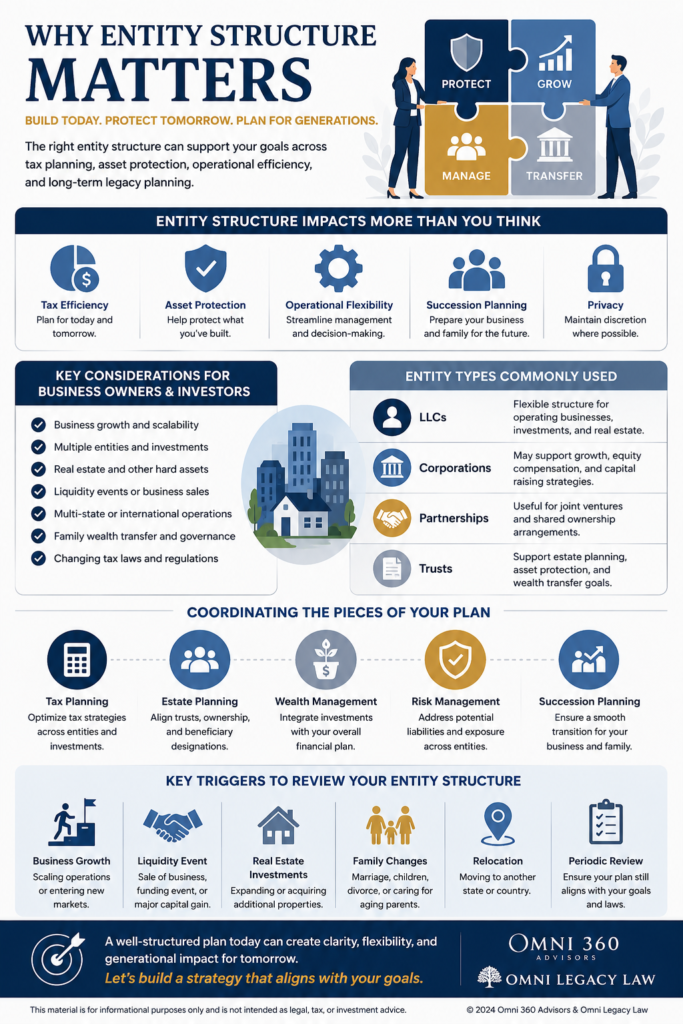
Learn how thoughtful entity structuring can support tax planning, asset protection, operational efficiency, and long-term wealth transfer strategies for business owners and multigenerational families.
Why Entity Structure Matters for Business Owners, Investors, and High-Net-Worth Families
As businesses grow, investments expand, and family wealth becomes more complex, many individuals begin asking an important question:
“Is our current entity structure still aligned with our goals?”
For business owners, real estate investors, and high-net-worth families, entity selection is often more than a legal or tax decision. It can influence operational flexibility, risk management, succession planning, privacy considerations, and long-term legacy strategies.
The challenge is that many individuals establish entities early in a business lifecycle and rarely revisit whether those structures still fit their evolving circumstances.
Entity Structure Is About More Than Formation
Choosing between an LLC, corporation, partnership, trust structure, or other planning entity is rarely a one-time event.
As businesses evolve, owners often encounter new considerations such as:
- Liquidity events or business sales
- Real estate investments
- Multi-state operations
- Family wealth transfer planning
- Asset protection considerations
- Tax efficiency objectives
- Succession and legacy planning
- Operational scalability
A structure that worked well during an early growth phase may not remain optimal years later.
Business Owners Often Face Increasing Complexity
Many entrepreneurs accumulate multiple entities over time — operating companies, holding companies, real estate LLCs, investment entities, trusts, or family partnerships.
While these structures may have been established for valid reasons, complexity can increase quickly if planning is not coordinated holistically.
For example, families with:
- Operating businesses
- Brokerage accounts
- Real estate holdings
- Trusts
- Retirement accounts
- Liquidity from a business sale
may benefit from reviewing how ownership, beneficiary designations, and entity structures align with broader family goals.
Coordinating Tax, Estate, and Operational Planning
Entity planning frequently intersects with several disciplines simultaneously, including:
- Tax planning
- Estate planning
- Wealth management
- Risk management
- Business succession
- Retirement planning
This is one reason many high-net-worth individuals and business owners increasingly seek integrated planning conversations rather than isolated advice from separate professionals.
For growing businesses and multigenerational families, coordination between these areas can become increasingly important over time.
Planning Around Liquidity Events
A business sale or major liquidity event often becomes a catalyst for revisiting entity structures and estate plans.
Families navigating liquidity may begin evaluating:
- Trust strategies
- Asset titling
- Family governance structures
- Gifting considerations
- Beneficiary coordination
- Long-term tax implications
In many cases, individuals already have older documents in place that may no longer reflect their current financial picture or family circumstances.
Periodic reviews can help identify outdated structures, unfunded trusts, or inconsistencies between estate documents and actual asset ownership.
Trust Structures and Long-Term Planning
Trust planning is often part of broader entity and legacy conversations.
Revocable living trusts, irrevocable trusts, LLC structures, and related planning vehicles may serve different purposes depending on a family’s goals, asset profile, and long-term priorities.
For some families, planning conversations focus on:
- Probate avoidance
- Privacy considerations
- Coordinated beneficiary planning
- Multi-generational wealth transfer
- Asset protection strategies
As discussed in client planning conversations, many individuals are also seeking guidance on how assets should be titled, what should or should not be moved into trust structures, and how beneficiary designations interact with the broader estate plan.
Entity Planning Should Evolve With Your Life
One of the most common planning gaps is assuming that entity structures established years ago still accomplish today’s objectives.
Major life and business changes — including marriage, children, business growth, retirement, relocation, or a liquidity event — can all justify revisiting planning structures.
Entity planning is rarely static. It often benefits from periodic review as personal, financial, and operational circumstances evolve.
Thoughtful entity structuring can play an important role in helping business owners and families organize complexity, coordinate planning objectives, and prepare for future transitions.
While every situation is unique, proactive conversations around ownership structures, trusts, tax considerations, and succession planning can help individuals better understand how their current framework aligns with long-term goals.
Omni 360 Advisors and Omni Legacy Law work with business owners, investors, and multigenerational families navigating increasingly sophisticated planning needs across business, tax, estate, and legacy considerations.
This blog was developed with the assistance of AI-based tools for research, drafting and editing support (ChatGPT), and reviewed by OMNI 360 personnel for accuracy and relevance. The information provided is educational and general in nature and is not intended to be, nor should it be construed as, specific investment, tax, or legal advice.




